The most engaged workforces use Missions on Kahoot! 360
Join millions of professionals boosting employee performance, productivity, and retention with Kahoot! 360, the ultimate workforce engagement platform.
Boost team collaboration and productivity by turning solo assignments into shared team achievements with Missions across training, onboarding, and communication.
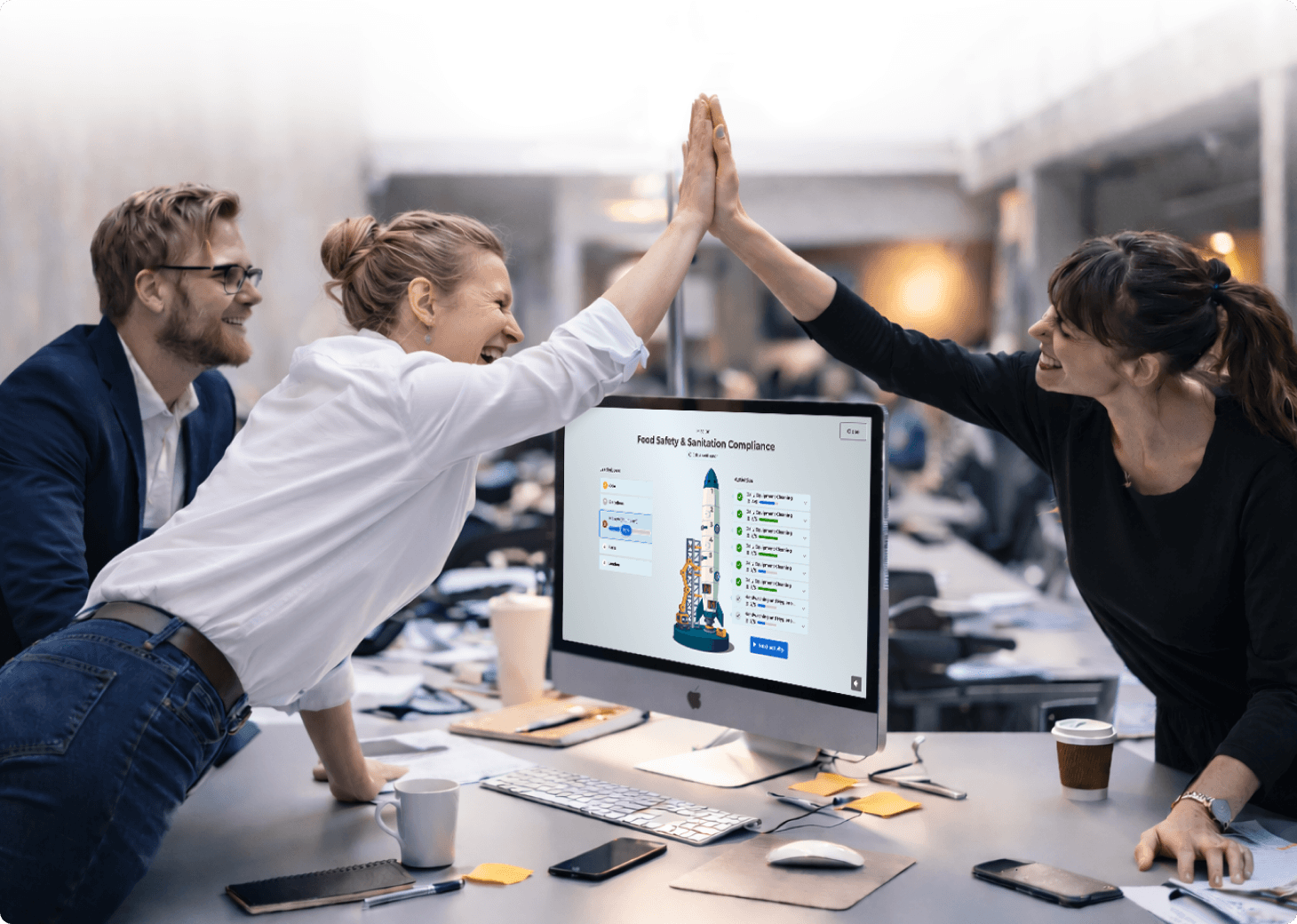






Turn your existing training, tasks, or update into shared team challenges that people actually finish – from training and onboarding to communication and more.
STEP 1
Assign a mission
Assign any content as a mission to individuals or teams – delivered via email, link, QR code, or directly in Kahoot! 360.
STEP 2
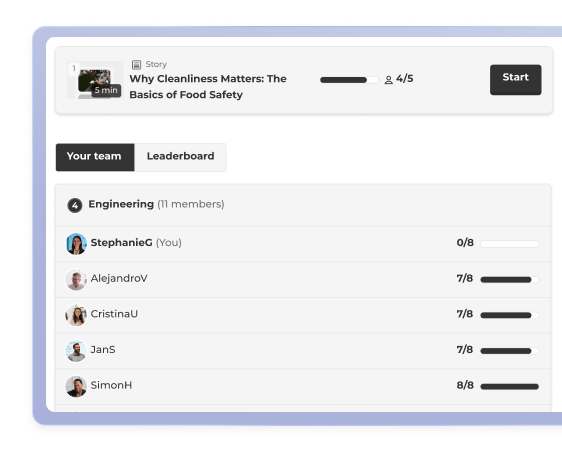
Let teams compete at their own pace
Participants complete their tasks, while a shared mission view shows progress, creating urgency and visible progress.
STEP 3
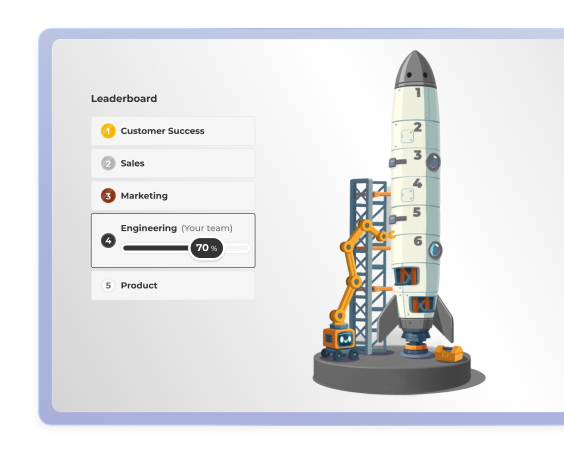
Turn progress into friendly competition
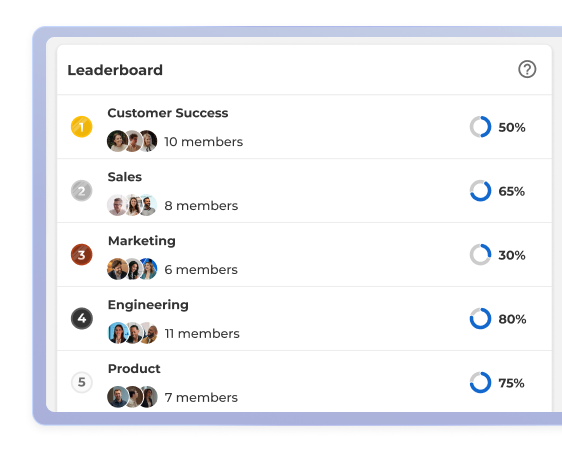
Put teams on a shared leaderboard to compare their process in building and launching the rocket.
STEP 4
Celebrate success and measure impact
Use mission reports to understand who’s on track and where additional support is needed.
Join millions of professionals boosting employee performance, productivity, and retention with Kahoot! 360, the ultimate workforce engagement platform.

higher cabin crew exam pass rate in 2025 after adding Kahoot! 360 to compliance training

boost in learner retention after introducing Kahoot! 360 into contact‑center training

employees with the Kahoot! app installed on their phones

Visible progress and friendly competition make people far more likely to complete training and assignments than traditional self-paced content.

Missions turns individual tasks into a shared team goal, aligning employees across locations and departments without forcing everyone into the same room or time zone.

As teams move their mission closer to launch, managers can quickly see who’s on track, where completion is lagging, and which groups might need extra support.

Missions combines autonomy, visible competence, and social relatedness with a clear goal and visual payoff – a combination that increases motivation, learning, and follow-through.
Missions is an asynchronous, team-based learning mode that turns tasks like training, onboarding, and internal communication into shared team challenges with a visible goal – launching the rocket together.
Missions is built for HR, L&D, communications, and operations leaders in distributed organizations who need to modernize their training stack, increase completion rates, and show the impact of their programs.
You can assign supported content types – including kahoots, courses, and other learning resources – directly to learners as part of a mission, delivered via email or link.
Yes. Missions are self-paced and available on both desktop and mobile, making them ideal for distributed and frontline workforces that can’t always join live sessions.
Missions is available across Kahoot! 360 Pro plans, Spirit, Spirit Premium, and Enterprise, so you can scale team missions from smaller groups to global organizations.
Yes. Missions gives you visibility into mission progress and completion today, and we’re expanding toward deeper learning-focused metrics like Mission accuracy to help you assess outcomes beyond simple completion.